

Arctic: in the footsteps of cult films
Where and how films about the Arctic were made
Camera! Action!
The "Arctic" theme became one of the most popular themes in Russian cinematography in the 1930s - at that time the active development of the North began, and everyone was familiar with the names of polar heroes.
Over the years it has not lost its relevance: the Arctic is about tough people, about overcoming, and about exciting adventures. Many of the films about the Arctic was filmed not in the north - in the studio studio pavilion or in the places where it is warmer. We will tell you about the films, where everything is fair: they tell about the Arctic - and are also made in the Arctic.
The film "Seven Brave Ones" shot in 1936 by director Sergey Gerasimov was a huge success, and encouraged more than one young man to tie his life to the study and exploration of the North. It is also beloved by modern viewers. The plot of the film is simple: an expedition of six people arrives for the winter in the Arctic and one more person makes his way there as a "hare". The film tells about the trials that await the courageous polar explorers, about how the relationship between them develops. The movie was shot at the original polar station in Tikhaya Bay (Arkhangelsk region, Gookera island of Franz Josef Land archipelago). As the actors - participants of the filming recollected, they did not perform their roles, but in fact were the real polar explorers.
The film "The Chief of Chukotka" (1967), directed by Vitaly Melnikov, can truly be called a classic of the national cinema. The plot of the film is quite traditional for the Soviet times: Komsomol member Alyosha Bychkov (played by Mikhail Kononov) tries to join the northern peoples to conquer the new world. He is strongly hindered by stingy and crafty Khramov (Alexei Gribov). But the unpretentious storyline seemed to have grown into a lively, colorful, exciting adventure film. Of course, with a happy ending. However, it wasn't shot exactly in Chukotka. Part of it was shooting on the Kola Peninsula, on the shores of the Barents and White Seas, and another part... in Crimea! But the latter fact had no impact on the film's authenticity.
The film "The Red Tent" (1969) by Mikhail Kalatozov was in many ways the brightest event in cinematography of those years. First of all, it was the largest international project at the time, initiated by Russian filmmakers. Artists from different countries took part in it, and its premiere took place in Rome. Besides, "The Red Tent" brought together a veritable movie star: Donatas Banionis, Nikita Mikhalkov, Eduard Martsevich, Ennio De Conchini from Italy, well known in Russia for "Italian Divorce" and "The Osprey", the Briton Robert Bolt, who has a whole collection of different awards, including the Oscar. Quite a few episodes were filmed in the Arctic, on Franz Josef Land, in the vicinity of the station Tikhaya Bay. The filmmakers were advised by people familiar with the Arctic life - the polar pilot Valentin Akkuratov and an experienced polar bear hunter, whose name is not known by history. A real record was set during the filming: Vanukki, Banionis and Martsevich walked in front of a film camera at 81 degrees North latitude for the first time in cinematic history.
When it comes to "Arctic" cinema, "Sannikov Land" (1973) probably comes to mind first. The film directed by the beginners Albert Mkrtchyan and Leonid Popov was initially criticized - either the spirit of the novel by Vladimir Obruchev was not interpreted well, or the actors were "wrong"... But the criticism stopped after the tremendous success of the film: in the first year more than 40 million viewers watched it, and it is impossible to imagine that nobody else except Oleg Dahl, Vladislav Dvorzhetsky and Sergey Shakurov, who played in the film, were in the main roles. The song by Alexander Zatsepin and Leonid Derbenyov "Everything in this stormy world is ghostly, there is only a moment, and hold on to it..." also turned out to be "eternal". Many young people have no idea that it is from the "Sannikov Land", but they still sing it... To be fair, let's note: the filmmakers did not reach the "proper" northern latitude: some episodes were filmed in Kamchatka, part - in the Gulf of Finland. Filming was also done further south: in Kabardino-Balkaria and Crimea. Wow, what an Arctic! But not to mention this film, of course, we can not.
But the film "Georgy Sedov" (1974), directed by Boris Grigoriev, was principally shot in the north: in the White Sea and Arkhangelsk. Actor Igor Ledogorov, who played the role of the fearless polar explorer Georgy Sedov, admitted that it helped him to convey the character of the hero and tell about his tragic fate and immortal exploit. The film "Territory," directed by Alexander Melnik in 2014, confirms that the "Arctic" theme is still relevant to modern filmmakers and viewers. The film is set in 1960. A geological expedition has long been developing a tin deposit in Chukotka, but there are doubts about the prospects of the mining area, so it is about to be shut down. The head of the expedition, Ilya Chinkov, is intuitive: there must be a gold deposit nearby, and the territory should not be closed. The plot seems to be simple, but thanks to the authors of the picture it has turned out to be deep and psychological. By the way, "geological intuition" is not a myth at all: that is how several significant deposits were discovered, including the Talnakh copper-nickel ore deposit in 1960.
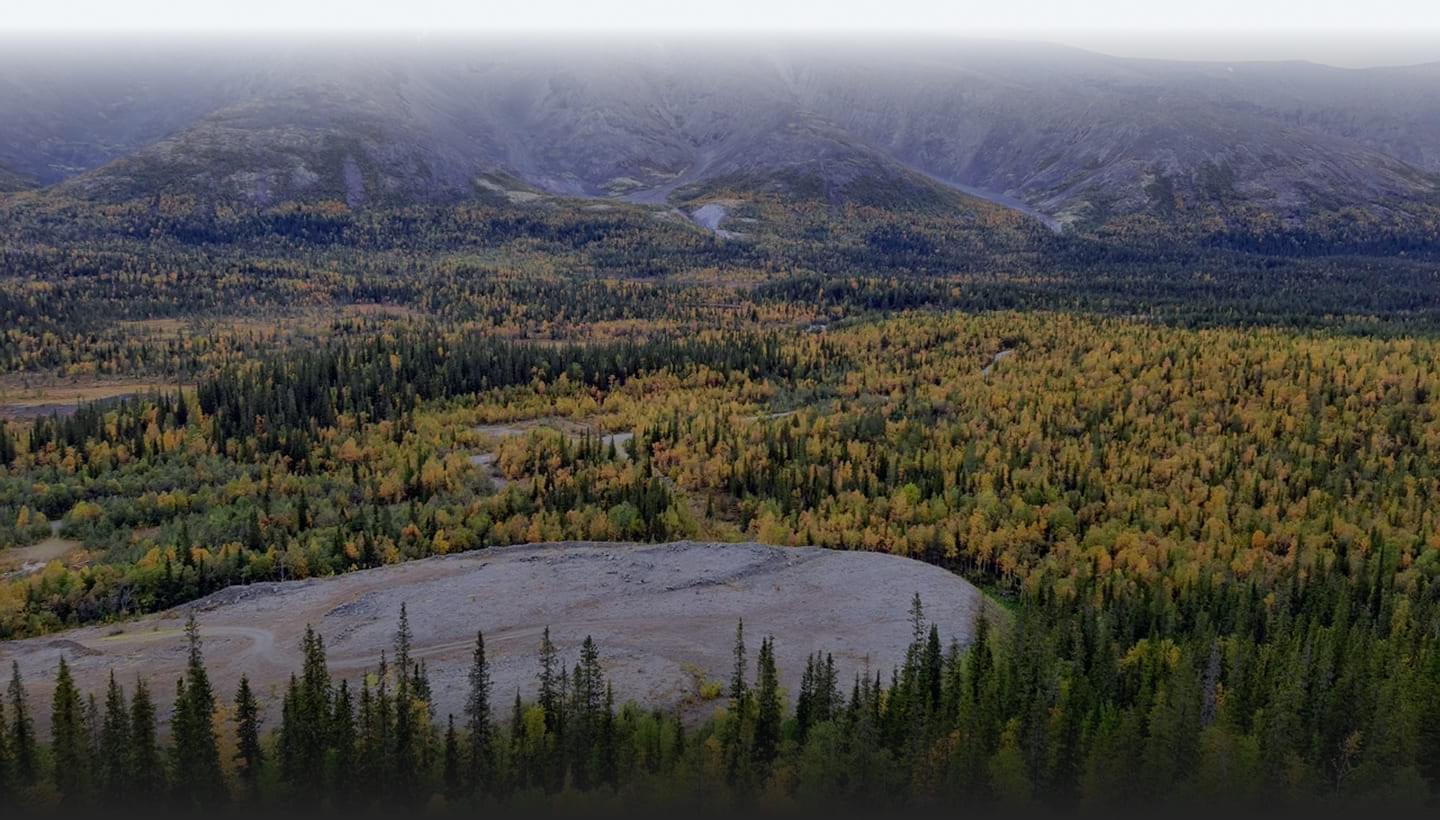
At the same time, in 2014, Andrei Zvyagintsev's film Leviathan was made, which was immediately praised by critics, including at the international level. The film has nothing to do with the classic "about the North" - it is a philosophical drama. But it was filmed on the Kola Peninsula, in Kirovsk and Teriberka. The director confessed that he took a fancy to the shore of the Barents Sea because of its virginity. The idea was also supported by the actors: Alexey Serebryakov, the main character, to get used to the image, did not leave Teriberka for two and a half months, and during this time did not maintain any contact with the outside world. There is no way out, now Teriberka is "the place where "Leviathan" was filmed". Although the ancient village is beautiful without it - thanks to its amazing nature and its great history.
Photo: Still from the film "Leviathan," Non-Stop Production, 2014
Reviews
So far, no one has left a review. Be the first!